Our thoughts impact how we feel. Unhelpful thoughts are rigid, goal blocking, and not reality tested. So, when we get stuck in unhelpful thinking habits, we feel sad, anxious, or distressed.
However, we have the power to change how our brains work by creating new habits and pathways; this is called neuroplasticity.
Unhelpful thoughts are not a personal failure and you’re not stuck with them for life. Just like we can change our bodies through physical exercise, we can change our minds through mental exercise.
Here are 4 steps to help you along with breaking free from unhelpful thinking habits:
Step 1: Identify your habits.
Have a read through the categories below and consider which sound familiar. There might be one or two that ring true or perhaps they all ring a bell; that’s ok!
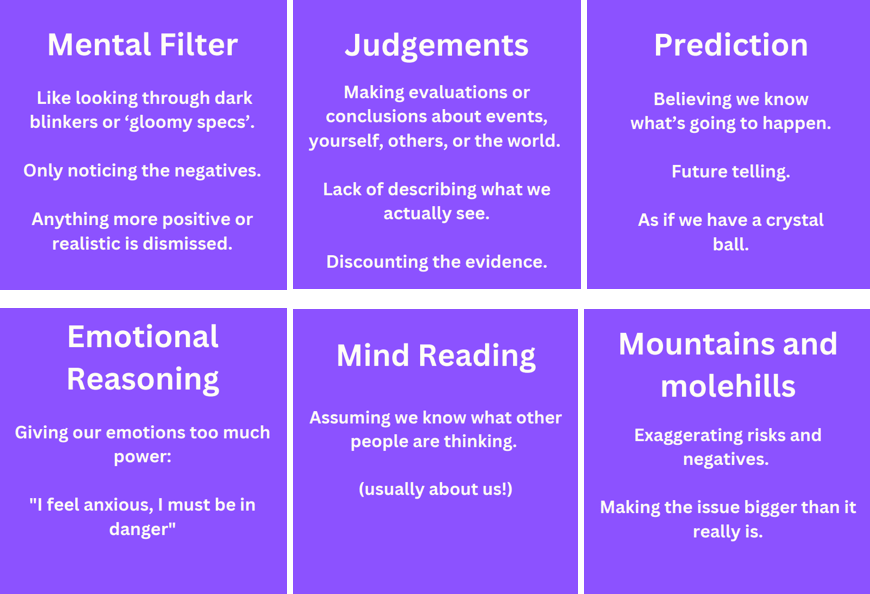
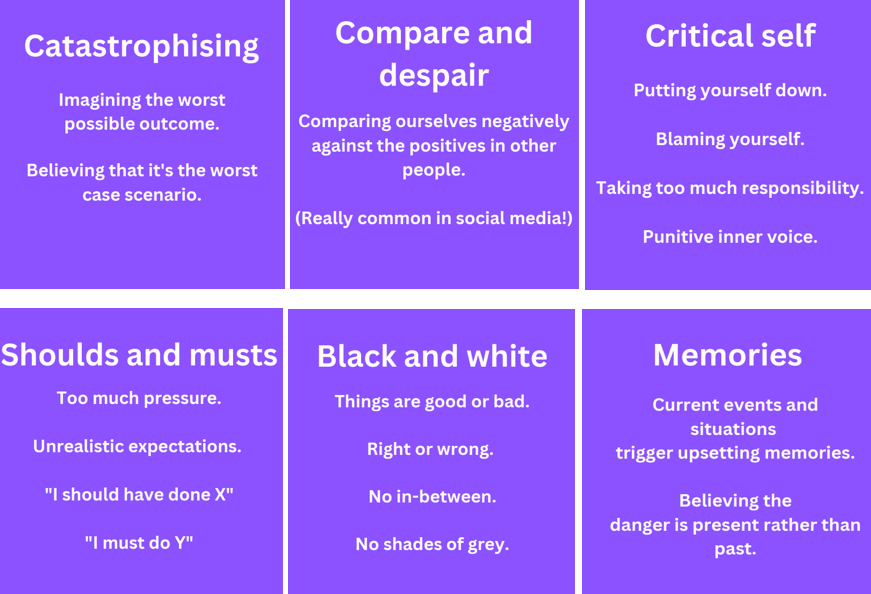
Step 2: Become aware of your habits.
You are not your thoughts. Awareness creates a distance between you and the thoughts so that you can begin to make positive changes.
An easy way to increase your awareness is to think about a recent time in which you felt sad, anxious, or distressed and to write down the thoughts that came into your mind at the time. Then notice which unhelpful thinking habits occurred.
Once you have this information, ask yourself, ‘where else does this play out and with whom?’.
Knowing which situations set off the habits makes it more possible to notice them when they appear in your life.
Step 3: Change your habits.
Now for the fun part: challenging and changing your thoughts. Ask yourself:
- What would be another way to look at this?
- What are the concrete facts about this situation?
- How likely is it that this will really happen?
- How will I find out if this is true?
- Am I making an assumption?
- What are the positives in this situation?
- What would be a more balanced way of looking at this?
- What would I tell a friend?
- Where are the shades of grey in this situation?
Step 4: Reinforce your changes.
This isn’t always easy as your brain will want to take you back to the familiarity of your previous habits. But regular practice goes a long way.
It’s natural to feel a bit frustrated when you notice the unhelpful habits playing out. But try to be kind to yourself, ‘oh, I’ve wandered off down my unhelpful path’ and gently guide yourself back towards Step 3.
You’ve learned many things over the years: reading and writing, perhaps swimming, riding a bike, or learning to drive. At first these things were a challenge, but with time and practice they become automatic. You’ll get there with your new helpful thoughts too.
 Therapy with Kirsty