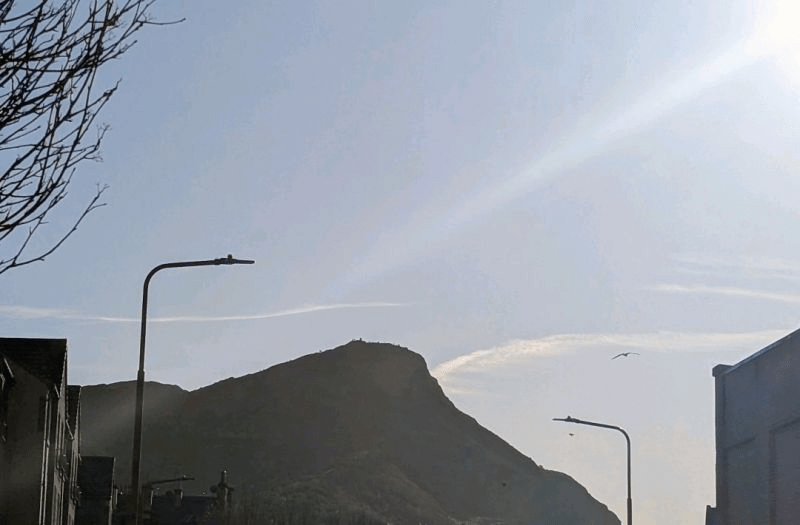
‘Ok, next lamppost’, my mum would say to 5 year old me.
This was a boundary.
She gave me the freedom to run but only as far as the next lamppost so that her eyes were on me, ensuring my safety. I gained a sense of autonomy and independence within safe boundaries.
The boundary became a challenge.
Seeing how quickly I could run to the next lamppost. Or how many times I could run to the lamppost and back to her until she’d caught me up. I gained achievement and enjoyment.
The challenge became a short-term goal.
When I go running as an adult and I think of giving up, I tell myself, ‘Ok, next lamppost’, instead of thinking about how far I still have to go. This way of thinking breaks down my goal distance for the run into smaller, manageable chunks. Once I get to the next lamppost, I again tell myself, ‘Ok, next lamppost’. I continue with this for as a long as I need; sometimes it’s just a couple of lampposts to get me going or sometimes it’s the whole way home! I gain drive and determination.
The goal became a metaphor.
In my life, when things get tough, I mentally change the ‘next lamppost’ to just focusing on the next task, not getting bogged down by other things on the to-do list, just do the next thing. Before I know it, I’ve ticked off so many things on the list, just by focusing on one small goal rather than the bigger picture. Small consistent steps add up. I gain hope and forward momentum.
It’s amazing how the messages from childhood shape our worldview as adults.
The concept of messages is something we need to raise our awareness of in therapy.
What were those messages from childhood?
What did they tell us about ourselves, other people, and the world?
How do they impact us now as adults in terms of our thoughts, beliefs, and behaviours?
What’s helpful and unhelpful about this impact?
What can we do to make small and consistent helpful changes?
A therapist can help you unpack all this and work towards meaningful change.
 Therapy with Kirsty