Anxiety is unpleasant and distressing with symptoms including:
- Feeling light-headed
- Feeling nauseous
- Sweaty face, armpits, and palms
- Knot in the stomach
- Racing heart
- Tight chest
Anxiety comes along when the amygdala (a small almond-shaped part of the brain) interprets a “threat” and begins preparing the mind and body for “fight-or-flight” in order to survive.
We need this system to function so that we can keep ourselves safe if there is an emergency.
However, in modern-day living, this system gets activated in non-life-threatening situations when we get anxious about daily life, so our fight-flight reaction is kicking in when it’s not really needed.
The issue is that when this reaction kicks in, the behavioural elements of fight or flight can become problematic for our work, relationships, and lifestyle.
The consequences of “flight”
Flight is when we escape the situation, we leave, we don’t turn up, we don’t face the problem. The amygdala threat alarm rings, the brain goes “get me out of here!”, and we flee.
This is an understandable reaction because the brain is interpreting the situation as threatening and is doing what it can in that moment to return you to “safety”.
So, we can say that, very short-term, avoidance works for dealing with anxiety.
But this isn’t the whole picture because as adults in modern day, that situation we avoided hasn’t gone away or been resolved; the problem is still there waiting to be dealt with.
We can sum up the problem with avoidance in the image below:
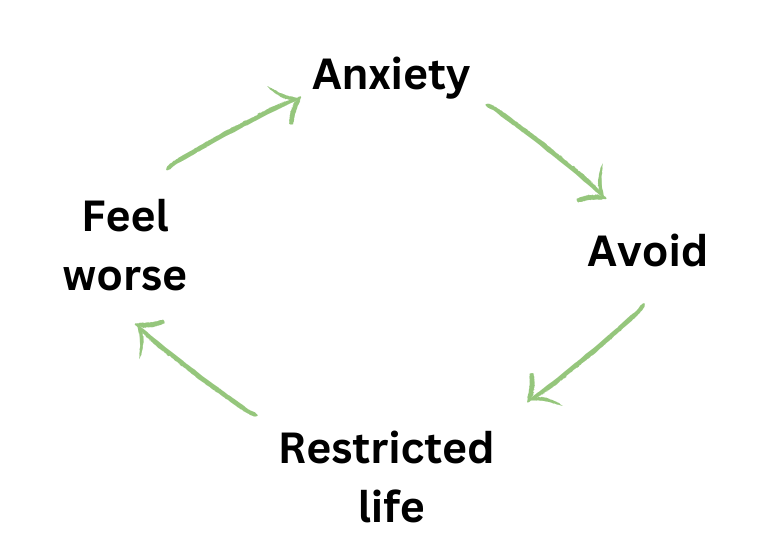
This is a vicious cycle.
Over the longer-term, as we go round and round this vicious cycle, we’re restricting our life, becoming more anxious, confidence is dipping, and our comfort zone becomes smaller and smaller while our anxiety increases and confidence falls.
What a pickle!
Know that it doesn’t need to be this way.
The first step is awareness. Become aware of what situations you’re avoiding and become aware of what you think about the situation. Common anxious thoughts relate to the problem being too big, you don’t know how to solve it or cope, you’re all alone and nobody else will help you.
Secondly, begin to talk back to those thoughts to give yourself some reassurance and encouragement. Remind yourself that things often aren’t as bad as the anxiety leads us to believe, that you can do it even if you need to break problems down into smaller manageable chunks or ask for help.
Thirdly, rip the band-aid! Ok, I know this is scary but biting the bullet is short-term “pain” for long-term gain. You can do this.
Top tip – remember to slow down and breathe to help regulate your nervous system as you take these steps.
If this feels too overwhelming to go alone, I’d be happy to help you. We can work out what the problems are, reframe unhelpful thoughts and beliefs, and create manageable steps to get you back out there with confidence.
I offer one-one therapy online and face-face in Edinburgh.
Drop me an email to get started.

 Therapy with Kirsty